Global Market Overview of Water-Repellent Women’s White Ski Jackets
The global demand for water-repellent women’s white ski jackets continues to rise as winter sports participation increases across Europe, North America, and Asia-Pacific. Over the past five years, the winter outdoor apparel market has grown steadily, supported by the expanding ski tourism industry and the rising purchasing power of consumers seeking high-performance technical outerwear.
As one of the most visible and functional categories in winter apparel, the water-repellent women’s white ski jacket has become an essential product in B2B procurement for retailers, outdoor sports brands, and resort suppliers. Its blend of weather protection, mobility, and modern design aligns with global buyer expectations for both performance and aesthetics.
Market Trends and Industry Drivers
The market for water-repellent women’s white ski jackets is shaped by several key trends:
• **Technical Performance Upgrades**: Manufacturers increasingly incorporate hydrophobic coatings, improved seam sealing, and multi-layer laminate fabrics to achieve advanced water-repellent performance.
• **Hybrid Insulation Systems**: The use of synthetic down alternatives and thermal-reflective linings enhances warmth without heavy bulk.
• **Sustainable Materials**: International buyers are prioritizing recycled polyester, PFC-free water-repellent coatings, and low-carbon manufacturing processes.
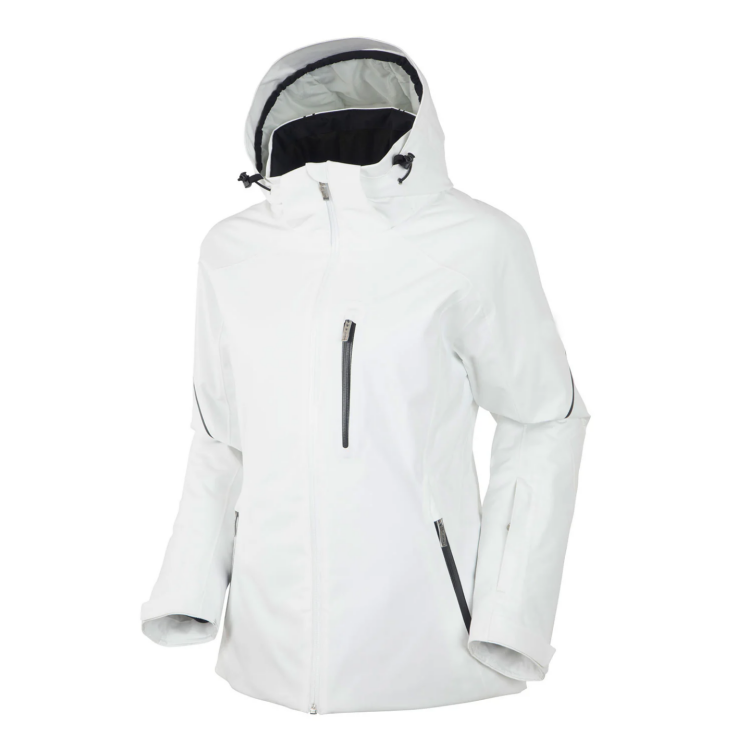
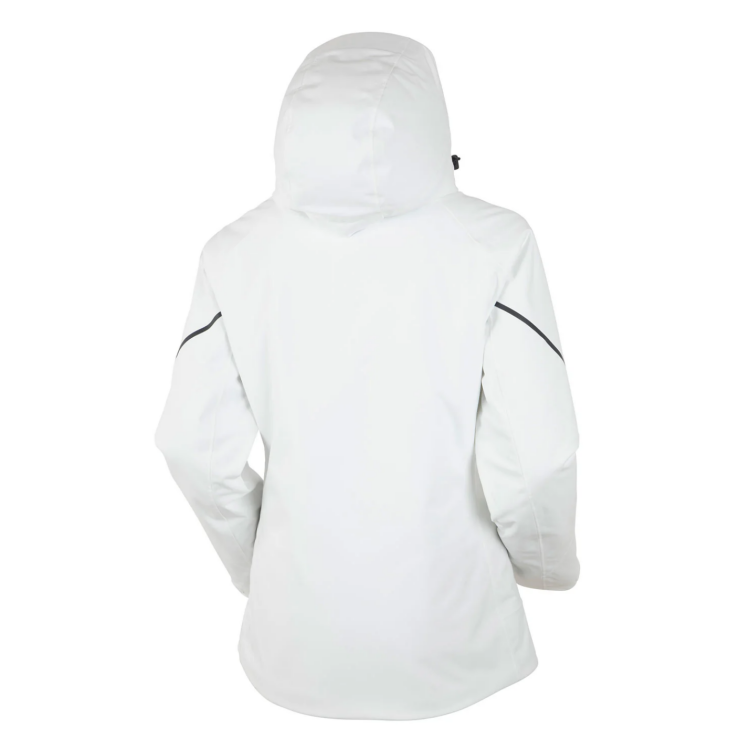
• **Fashion-Forward Color Trends**: The white ski jacket remains popular for its clean visual identity, often paired with metallic trims or textured panels.
• **Growing Female Outdoor Market**: Women’s winter apparel is growing faster than the overall category, increasing demand for tailored fits and ergonomic patterns.
Technical Specifications of Water-Repellent Women’s White Ski Jackets
A high-quality water-repellent women’s white ski jacket typically integrates multiple technical components to achieve warmth, mobility, and protection:
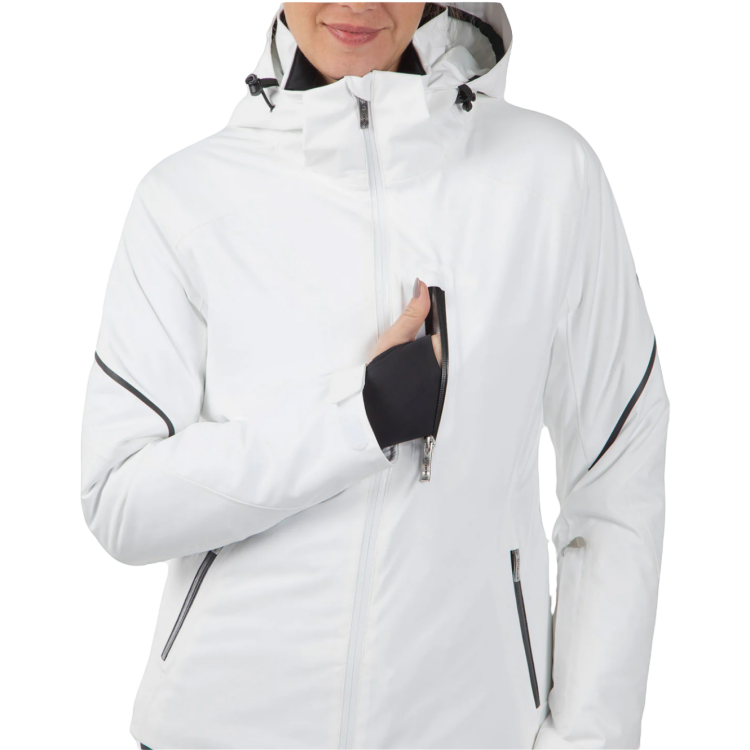
• **Fabric Construction**: 2-layer or 3-layer polyester or nylon with breathable membrane.
• **Water-Repellent Rating**: Durable Water Repellent (DWR) treatment with 5,000–20,000 mm hydrostatic head options.
• **Breathability Level**: 5,000–15,000 g/m²/24h moisture vapor transmission rates for optimal ventilation.
• **Insulation**: Synthetic insulation ranging from 80–160 g/m², depending on climate and activity level.
• **Seam Sealing**: Fully or critically taped seams for moisture control.
• **Zipper Systems**: Waterproof zippers and storm flaps for enhanced protection.
• **Fit and Patterning**: Tailored female-specific fit with articulated sleeves and adjustable hem or cuffs.
These specifications not only ensure comfort on the slopes but also support global B2B buyers seeking reliable winter apparel meeting international performance standards.
Product Structure and Functional Components
The structure of a water-repellent women’s white ski jacket is designed to balance insulation, breathability, and durability:
• **Outer Shell**: Durable polyester/nylon coated with DWR for water-repellent protection.
• **Inner Lining**: Brushed tricot or lightweight polyester taffeta for moisture management.
• **Insulation Layer**: Synthetic microfiber fill that retains warmth even in damp conditions.
• **Membrane Layer**: Breathable waterproof membrane between shell and lining.
• **Reinforced Panels**: Shoulder and elbow reinforcement for extended durability in active sports.
• **Ventilation Zones**: Underarm zip vents for airflow control during physical activity.
• **Snow Skirt**: Adjustable barrier preventing snow intrusion during skiing.
Manufacturing Process and Quality Control
The manufacturing of water-repellent women’s white ski jackets requires precision engineering and strict quality control:
• **Fabric Lamination**: Membranes are bonded to base fabrics to achieve water-repellent and breathable performance.
• **Pattern Development**: Female-specific ergonomic patterns ensure mobility and accurate fit.
• **Cutting and Sewing**: Automated cutting machines improve consistency; specialized stitching enhances structural integrity.
• **Seam Sealing**: Heat-sealed tape techniques ensure full waterproof protection.
• **DWR Treatment Application**: Eco-friendly water-repellent coatings are applied and cured.
• **Performance Testing**: Jackets undergo water penetration, breathability, insulation, and colorfastness testing to meet global standards.
By maintaining strict quality control, suppliers can provide consistent performance across bulk orders—one of the core expectations of international buyers.
International Buyer Preferences and Sourcing Pain Points
Global buyers evaluating water-repellent women’s white ski jackets often prioritize a specific set of criteria:
• **Consistent Color Accuracy**: White fabric requires precise dyeing and anti-yellowing treatment.
• **Reliable Water-Repellent Claims**: Buyers demand certified performance data and lab test results.
• **MOQ Flexibility**: Retailers and distributors seek scalable order quantities to match market demand.
• **Sustainable Material Options**: Many sourcing teams now request recycled shell fabrics or PFC-free DWR.
• **Durability Assurance**: Seam strength, zipper lifespan, and insulation stability are critical for long-term performance.
• **Timely Lead Times**: Seasonal apparel cycles require strict delivery windows, especially in winter sports markets.
Understanding and addressing these sourcing pain points is essential to winning long-term B2B partnerships.
Applications and Performance Benefits
The water-repellent women’s white ski jacket is widely used across winter sports, lifestyle fashion, and cold-weather travel. Key applications include:
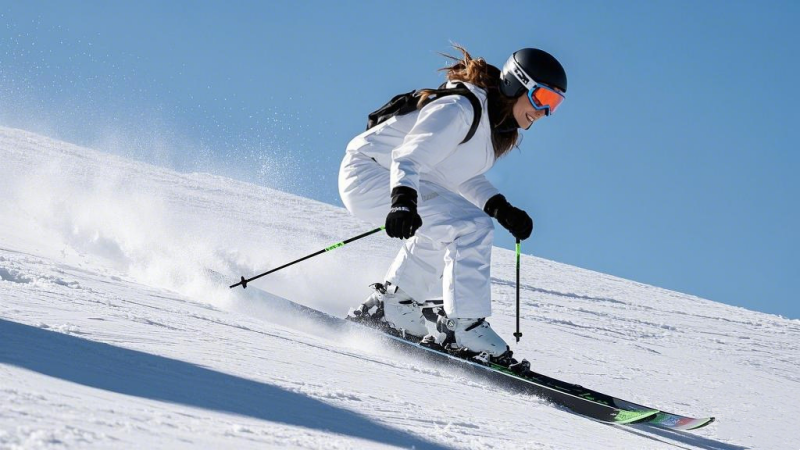
• **Downhill Skiing and Snowboarding**
• **Mountain Resort Activities**
• **Urban Winter Fashion Collections**
• **Expedition and Outdoor Training**
• **Travel and Tourism Markets**
Its performance advantages—such as moisture protection, warmth retention, lightweight construction, and clean aesthetic—make it a staple in global winter apparel assortments.
Frequently Asked Questions (FAQ)
1. What water-repellent rating is recommended for ski jackets?
A hydrostatic head rating of 10,000–20,000 mm is commonly preferred for high-performance skiing conditions.
2. Can white ski jackets maintain color brightness over time?
Yes. With anti-yellowing treatments and high-quality fabric coatings, color stability can be preserved through multiple seasons.
3. Are customized fits and design elements available?
We support customized insulation levels, shell fabrics, trims, and sizing to meet brand-specific requirements.
4. What certifications are relevant for winter technical apparel?
Buyers often request OEKO-TEX, GRS, and quality test reports for water-repellent and insulation performance.
Request Samples, Technical Sheets, and Quotation Support
We provide comprehensive B2B support for companies sourcing water-repellent women’s white ski jackets. Our team can supply technical specifications, detailed performance reports, and sample units for quality evaluation.
Contact us to request quotations, customization options, and production schedules that match your upcoming seasonal planning. Our goal is to help you secure high-performance, globally compliant winter apparel that supports growth across all sales channels.


 Francés
 Español
 Русский
 German
 Português
 Swedish
 Italian
 العربية
 Japanese