
 Francés
 Español
 Русский
 German
 Português
 Swedish
 Italian
 العربية
 Japanese




Is Heated Clothing Safe? A Professional B2B Analysis for Global Buyers
As demand for cold-weather protection rises across industrial, commercial, and outdoor sectors, heated clothing has evolved from a niche consumer product into a standardized functional apparel category for global B2B procurement. From construction sites and logistics operations to outdoor sports retail and defense supply chains, buyers increasingly ask a critical question: Is heated clothing safe to wear?
This article provides a comprehensive, evidence-based analysis of heated clothing safety, combining global market data, technology parameters, manufacturing processes, and international buyer preferences. Drawing on industry experience and the product engineering practices of Bowins, this guide is designed to support informed sourcing decisions.
Global Industry Background of Heated Clothing
The global heated clothing market has expanded rapidly over the past decade. According to multiple industry reports, the market is driven by:
Increasing outdoor labor exposure in cold regions
Growth in winter sports and outdoor recreation
Rising adoption of functional PPE apparel
Advancements in battery and heating element technologies
North America and Europe remain the largest import markets for heated clothing, particularly for workwear, hunting gear, motorcycle apparel, and thermal underlayers. Asia-Pacific has emerged as the primary manufacturing hub due to mature textile supply chains and electronic integration capabilities.
From a B2B perspective, heated clothing safety has become a core procurement criterion, alongside heating efficiency, durability, and compliance.
Is Heated Clothing Safe? Technical and Regulatory Perspective
Safety Fundamentals of Heated Clothing
Modern heated clothing is engineered with multiple layers of safety protection. When manufactured to international standards, heated clothing is considered safe for daily and professional use.
Key safety principles include:
Low-voltage operation (typically 5V–12V DC)
Even heat distribution to avoid hot spots
Temperature control systems with predefined limits
Insulated wiring embedded within textile layers
Bowins heated clothing systems are designed to maintain surface temperatures within safe physiological ranges, reducing the risk of burns or overheating.
International Safety Standards and Compliance
For global buyers, compliance is essential. Certified heated clothing typically meets:
Electrical & Battery Standards
CE (EU)
FCC (USA)
UL / ETL (battery components)
UN38.3 (lithium battery transport)
Textile & Chemical Safety
OEKO-TEX® Standard 100
REACH compliance
RoHS for electronic components
Heated clothing that lacks these certifications presents elevated risk, particularly for institutional or industrial procurement.
Core Technology Parameters in Heated Clothing
Heating Elements
Most advanced heated clothing uses carbon fiber heating elements, favored for:
Fast heat-up time
Flexibility and wash resistance
Stable resistance values
Metal wire systems, while cheaper, are gradually being phased out in premium heated clothing lines due to uneven heating and higher failure rates.
Power Supply and Battery Safety
Lithium-ion battery packs are standard in heated clothing. Safety-focused designs include:
Overcharge protection
Short-circuit prevention
Thermal cutoff mechanisms
Bowins integrates smart battery modules tested for extreme temperature cycles, improving both user safety and product lifespan.
Product Structure of Heated Clothing
A typical heated clothing structure includes:
Outer Shell – Windproof, water-resistant, abrasion-tested fabric
Insulation Layer – Down or synthetic thermal fill
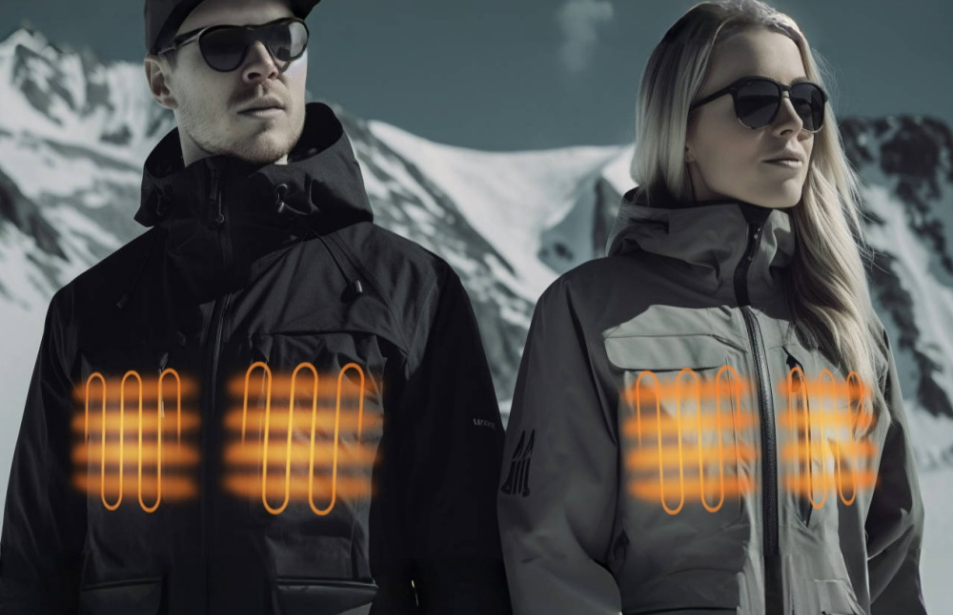
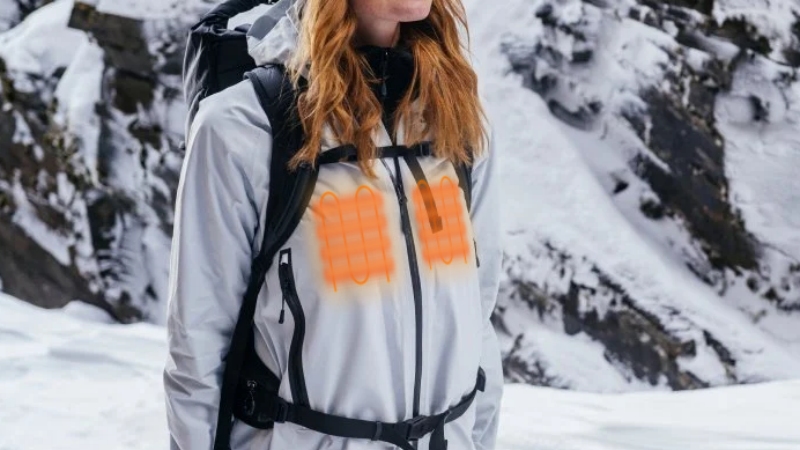
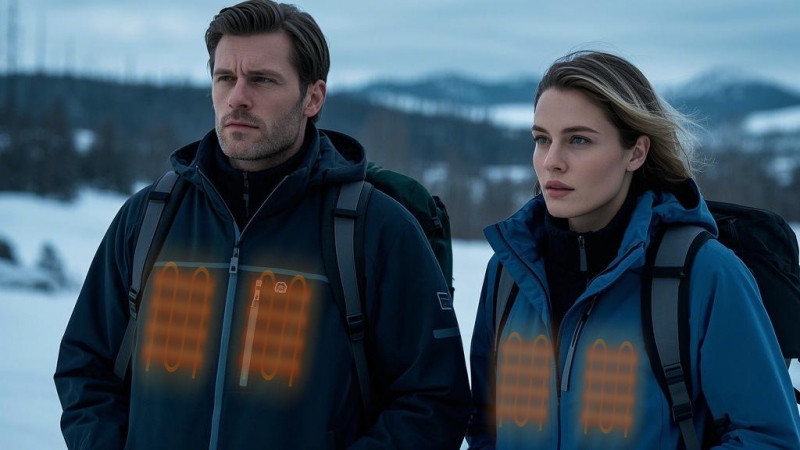
Heating Layer – Carbon fiber heating zones (chest, back, core)
Inner Lining – Skin-friendly, breathable textile
Control Interface – LED or button-based temperature adjustment
This multilayer architecture ensures heated clothing remains safe, breathable, and ergonomically stable during prolonged wear.
Manufacturing Process and Quality Control
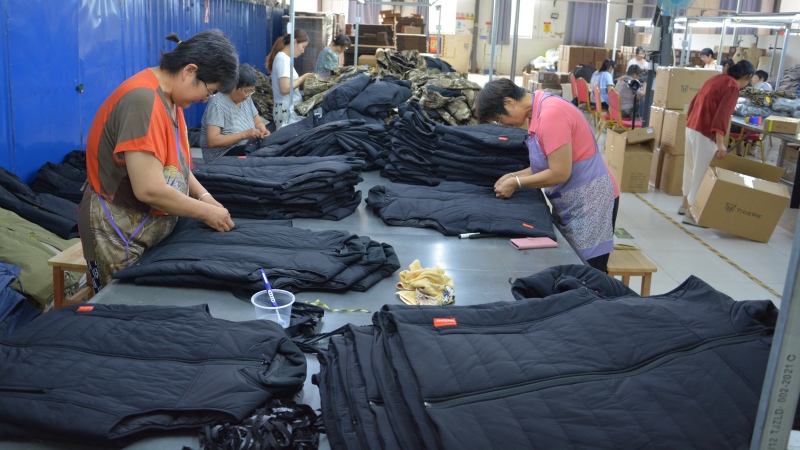
Reliable heated clothing safety begins at the manufacturing stage. A standardized production workflow includes:
Incoming material inspection (fabric, wiring, batteries)
Heating element resistance testing
Automated stitching and cable routing
Functional heating tests (pre- and post-wash)
Battery aging and charge-discharge cycle testing
Bowins applies multi-stage QC protocols, ensuring each heated clothing unit meets export-grade reliability standards.
Market Trends Impacting Heated Clothing Safety
Smart Temperature Control
Advanced heated clothing increasingly features intelligent controllers that adjust output based on ambient temperature and wear duration, minimizing overheating risks.
Modular Battery Systems
Detachable battery designs improve safety during washing and transportation, a growing requirement among international buyers.
Sustainable and Safer Materials
Demand is rising for recyclable insulation materials and low-toxicity coatings, particularly in EU markets.
International Buyer Preferences and Pain Points
What B2B Buyers Prioritize
Global buyers sourcing heated clothing consistently focus on:
Certified safety compliance
Stable long-term heating performance
Battery replacement availability
Low defect rates across bulk orders
Common Buyer Pain Points
Overheating complaints from end users
Battery degradation after one winter season
Inconsistent sizing due to integrated wiring
Limited after-sales technical support
Manufacturers like Bowins address these issues through standardized sizing, modular electronics, and documented test reports.
Application Scenarios of Heated Clothing
Heated clothing is widely used in:
Construction and infrastructure projects
Cold-chain logistics and warehousing
Outdoor sports and hunting retail
Motorcycle and snowmobile apparel
Utility maintenance and field services
In each application, safety and thermal stability directly impact worker productivity and liability risk.
Why Bowins Heated Clothing Meets Global Safety Expectations
Bowins focuses on export-oriented heated clothing solutions with:
Full certification packages
OEM/ODM customization for B2B clients
Controlled heating algorithms
Long-cycle battery performance
This positions Bowins as a reliable partner for importers, distributors, and private-label brands seeking compliant heated clothing.
B2B FAQ: Heated Clothing Safety
Q1: Can heated clothing be worn for long hours safely?
Yes. Certified heated clothing with temperature regulation and low-voltage systems is designed for extended wear without safety risks.
Q2: Is heated clothing safe in wet or snowy environments?
When properly insulated and water-resistant, heated clothing is safe for cold and damp conditions. Batteries must remain dry and compliant.
Q3: Does heated clothing pose a fire hazard?
High-quality heated clothing uses thermal cutoffs and insulated wiring, making fire risk extremely low under normal use.
Q4: How long do heated clothing batteries last?
Most industrial-grade heated clothing batteries support 6–10 hours per charge, depending on temperature settings.
Professional Call to Action
For international buyers seeking safe, certified, and scalable heated clothing solutions, Bowins provides technical documentation, compliance reports, and sample testing support.
Contact Bowins today to request:
Detailed specifications
Safety certifications
OEM/ODM customization options
Quotation and samples for bulk orders
Invest in heated clothing that meets global safety standards—engineered for performance, reliability, and long-term value.


