 Francés
 Español
 Русский
 German
 Português
 Swedish
 Italian
 العربية
 Japanese



Ski Apparel: Technical Trends, Market Outlook and Sourcing Guidance for B2B Buyers
Executive summary
Ski Apparel remains a high-value segment within outdoor technical clothing, driven by a steady recovery in winter sports participation and rising demand for premium, performance-led products. This report-style news article provides international B2B buyers with market context, data-driven trends, technical specifications, sourcing considerations and manufacturing notes to inform procurement, product development and supply-chain decision making.
Market background and demand drivers
The global snow sports and ski apparel market has demonstrated resilient growth following pandemic-period volatility. Industry estimates place the global snow sports apparel market value in the low-single-billion USD range with projected mid-to-high single-digit CAGR over the next five to seven years, reflecting expanding participation and year-round athleisure adoption.
Key demand drivers relevant to B2B buyers of Ski Apparel include:
Increasing recreational and resort visitation in emerging markets.
Elevated expectations for waterproofing, breathability and thermal performance.
Growing corporate and resort uniform programs seeking bulk, private-label Ski Apparel.
Sustainability and chemical-compliance requirements from European and North American procurement teams.
Technical requirements and specification trends
Waterproofing and breathability metrics
B2B buyers should specify hydrostatic head (waterproof rating) and MVTR (moisture vapor transmission rate) targets in tech packs. For reliable slope performance, fabric hydrostatic head ratings of 10,000 mm or higher are commonly requested; high-performance Ski Apparel often targets 20,000 mm for extended wet-snow exposure, while breathability targets typically fall between 10,000–20,000 g/m²/24h depending on activity intensity. These objective metrics enable laboratories and suppliers to validate material claims.
Layering systems and insulation
Modern Ski Apparel follows a system approach: a durable waterproof shell (2-, 2.5- or 3-layer constructions), an active insulating mid-layer (down or advanced synthetic like PrimaLoft), and moisture-managing base layers (merino or synthetic blends). Synthetic insulations have gained traction for wet-season resilience and cost efficiency; down remains preferred where high warmth-to-weight is paramount.
Materials and construction
Face fabrics are typically nylon or polyester blends with membrane technologies (ePTFE, PU or PE laminates) and DWR (Durable Water Repellent) finishes. Attention to seam sealing (fully taped seams), YKK technical zippers, reinforced high-abrasion zones and ventilation features (pit zips, mesh vents) differentiates high-end Ski Apparel from commodity offerings. Recent industry guidance also highlights transition away from legacy PFAS-based DWR chemistries toward PFAS-free alternatives—an important compliance and marketing consideration for export to restrictive markets.
Market trends and buyer implications
Performance + sustainability convergence
B2B buyers increasingly request Ski Apparel that balances high-performance membranes and insulation with verifiable sustainability claims—recycled face fabrics, traceable supply chains and PFAS-free DWRs. Suppliers who can deliver third-party test reports (hydrostatic head, MVTR, colorfastness, flammability where required) and chain-of-custody documentation will gain an advantage.
Customization and private label demand
Resorts, tour operators and specialty retailers favor private-label Ski Apparel with team customization, RFID pockets and integrated pass windows. MOQ flexibility, reliable lead times and technical sampling capabilities (pre-production samples, lab test certificates) are central to winning B2B contracts.
Pricing pressure and value engineering
Buyers face pressure to optimize landed cost while maintaining performance. Value engineering levers include selective reinforcement (only on high-wear areas), hybrid fill strategies (synthetic + down zones), and 2.5-layer membrane constructions that reduce cost without sacrificing baseline waterproofing.
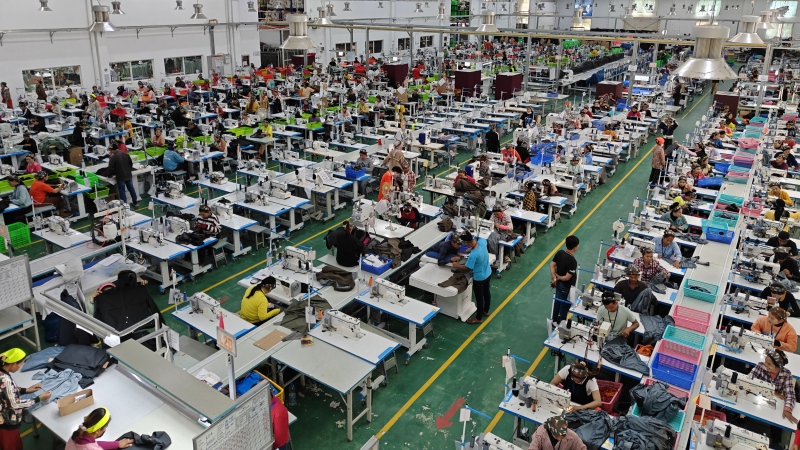
Manufacturing and quality control overview
From tech pack to production
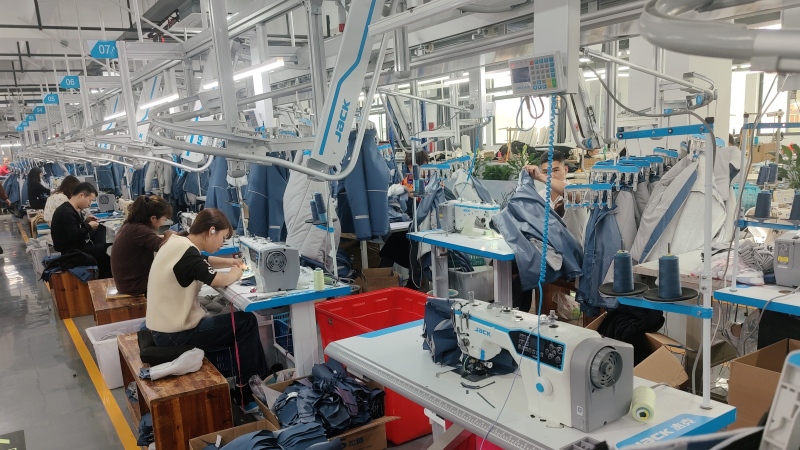
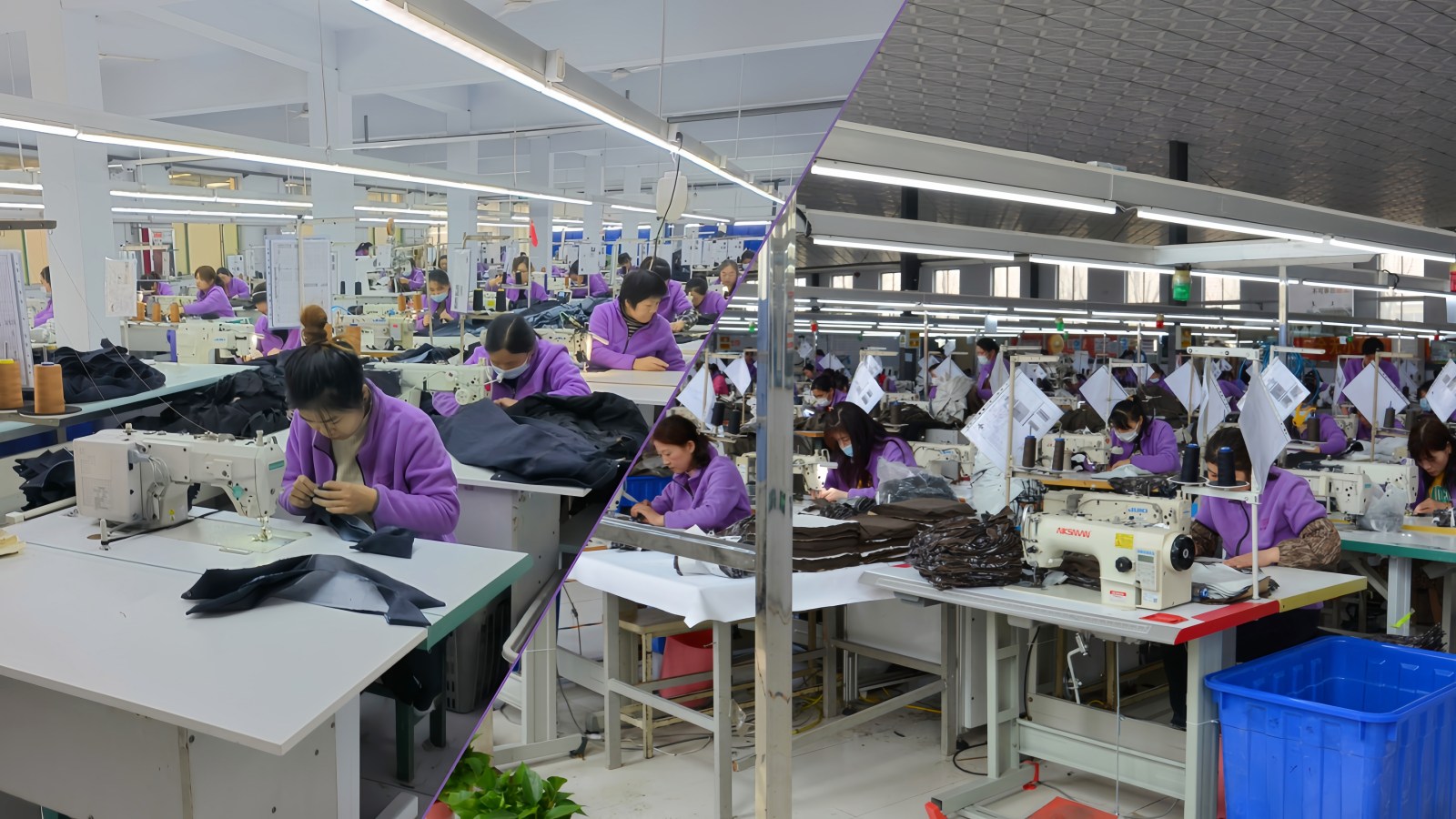
A typical Ski Apparel manufacturing workflow for B2B orders:
Technical specification: Buyer issues a detailed tech pack including target hydrostatic head, MVTR, insulation weight (g/m²), trim list and measurement charts.
Material sourcing & swatches: Supplier provides fabric swatches, membrane certificates and DWR treatment details.
Proto/sample stage: Pattern making, sample cut and fit session; functional tests such as seam sealing checks and zipper compatibility.
Laboratory testing: Third-party testing for waterproof rating, breathability, colorfastness and insulation performance.
Pilot run and QC: Small pilot production run, inline and end-of-line inspections, AQL checks and packing validation.
Mass production and logistics: Production scaling, cartonization, compression packing if needed, and FOB/CIF shipping coordination.
Buyers should include explicit QC checkpoints in contracts (incoming material inspection, mid-run checks, final AQL) and require documented test results for load-bearing claims.
Cost, lead time and procurement tips
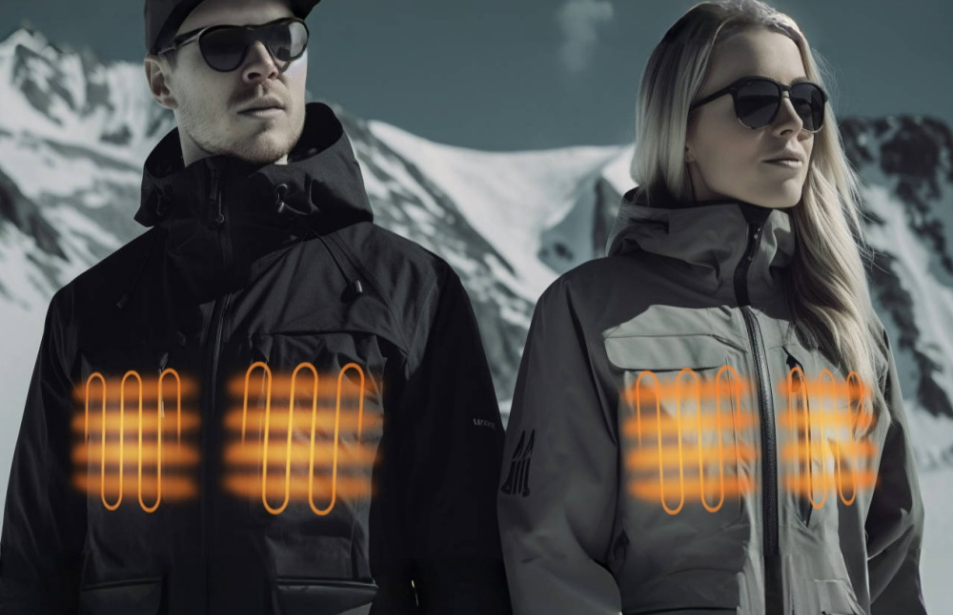
Cost drivers: membrane type, insulation material, hardware quality (zippers, buckles), seam sealing method and specialized trims (RFID, heated elements).
Lead times: Sampling to mass production commonly ranges from 6–12 weeks depending on complexity and seasonal factory load; urgent / out-of-season orders will attract expedited fees.
Trade terms: Specify FOB vs CIF and align on payment terms (TT, LC) and penalties for late delivery in PO terms.
FAQ
Q1: What waterproof and breathability ratings should I specify for resort Ski Apparel?
A: For general resort use specify at least 10,000 mm waterproofing and 10,000 g/m²/24h breathability; for high-exposure or multi-day wet conditions target 15,000–20,000 mm and 15,000+ MVTR.
Q2: How can I verify a supplier’s sustainability claims for Ski Apparel?
A: Require material certifications (GRS, RCS), PFAS-free DWR declarations, and third-party test reports. Audit trails from fiber to finished garment (mill to factory) are best practice.
Q3: What are common failure modes to inspect during QC?
A: Check seam sealing integrity, zipper waterproof function, insulation migration (clumping), measurement accuracy versus spec, and DWR performance after standardized wash cycles.
Q4: Is synthetic insulation acceptable for premium Ski Apparel?
A: Yes—advanced synthetic insulations offer wet-weather performance and cost benefits. For the highest warmth-to-weight, down remains superior but requires hydrophobic treatments to mitigate wetting issues.
Conclusion & call to action
For international B2B buyers, sourcing high-performance, compliant Ski Apparel requires precise technical specifications, robust supplier validation and clear quality expectations. Suppliers that can couple reliable waterproof/breathability performance with sustainability documentation and flexible manufacturing capacity will command the most attractive contracts.
If you are evaluating suppliers, requesting samples or preparing a technical spec pack for Ski Apparel procurement, our team can assist with a supplier short-list, template tech pack and a QC checklist tailored to your target hydrostatic head, MVTR and insulation requirements. Contact us today to initiate a supplier audit or request prototype samples for factory validation.


