For professionals in the outdoor apparel trade, the question "What clothes do you wear for hunting?" opens the door to a complex, technology-driven sector. Hunting clothing is not merely casual outdoor wear; it is a category of highly specialized functional hunting apparel engineered for concealment, environmental protection, and endurance. The global market for hunting gear is robust, driven by a dedicated consumer base that prioritizes performance and reliability above all. For B2B buyers, sourcing this category successfully requires a deep understanding of technical fabrics, stringent testing standards, and the specific layering systems demanded by hunters in diverse terrains and climates. This guide provides a comprehensive overview of the hunting apparel landscape, offering crucial insights for sourcing high-performance gear that meets the exacting standards of the global market.
The Global Hunting Apparel Market: Resilience and Specialization
The hunting clothing industry represents a stable and lucrative segment within the broader outdoor market. Characterized by brand loyalty and a focus on durability, it has shown resilience against broader economic fluctuations. The market is particularly strong in North America and Europe, with growing interest in regions like Eastern Europe and New Zealand. Key drivers include sustained participation rates, the introduction of higher-tech materials at accessible price points, and a growing segment of ethical and conservation-minded hunters seeking quality gear. For B2B buyers, this translates to demand for a diversified portfolio: from essential camouflage hunting gear for whitetail deer to advanced, insulated waterproof systems for waterfowl or alpine hunting. The trend is moving beyond basic concealment towards integrated comfort systems—such as scent-control technology and adaptable layering—making partnerships with knowledgeable manufacturers like Bowins essential for developing competitive product lines.

Deconstructing the Hunter's Layering System
A professional hunter’s outfit is a purpose-built system. Each layer serves a non-negotiable function, and sourcing requires expertise in the materials and construction that fulfill these roles.
1. The Base Layer: Scent Management and Moisture Control
The foundation is critical. A hunting base layer must manage moisture and, increasingly, control human scent.
Materials: Merino wool blends are favored for their natural odor resistance, temperature regulation, and quiet softness. Advanced synthetics with embedded antimicrobial and scent-control treatments (like silver salt or activated carbon technologies) are also prevalent. Cotton is strictly avoided.
B2B Sourcing Focus: Buyers must verify claims of scent-control efficacy through laboratory test reports and seek fabrics that balance functionality with durability after repeated washes.
2. The Insulation Layer: Warmth Without Bulk
The mid-layer provides warmth during static periods in blinds or tree stands.
Materials: High-loft fleece, lightweight down (with DWR treatment), and advanced synthetic insulations like PrimaLoft® are standard. The key is compressibility and quietness.
B2B Sourcing Focus: Insulation must be packaged in silent, non-reflective fabrics. Look for manufacturers, such as Bowins, who specialize in constructing insulated garments with reinforced panels in high-wear areas (like shoulders from carrying a rifle sling).
3. The Outer Shell: The Primary Defense
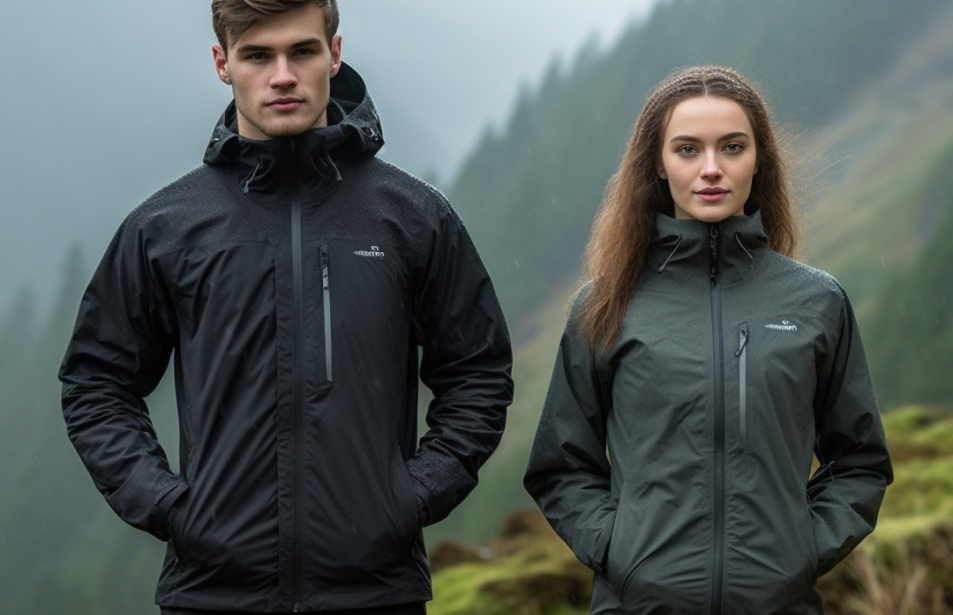
This is the most technically complex layer. A hunting jacket and pant system must be waterproof, windproof, breathable, durable, and silent.
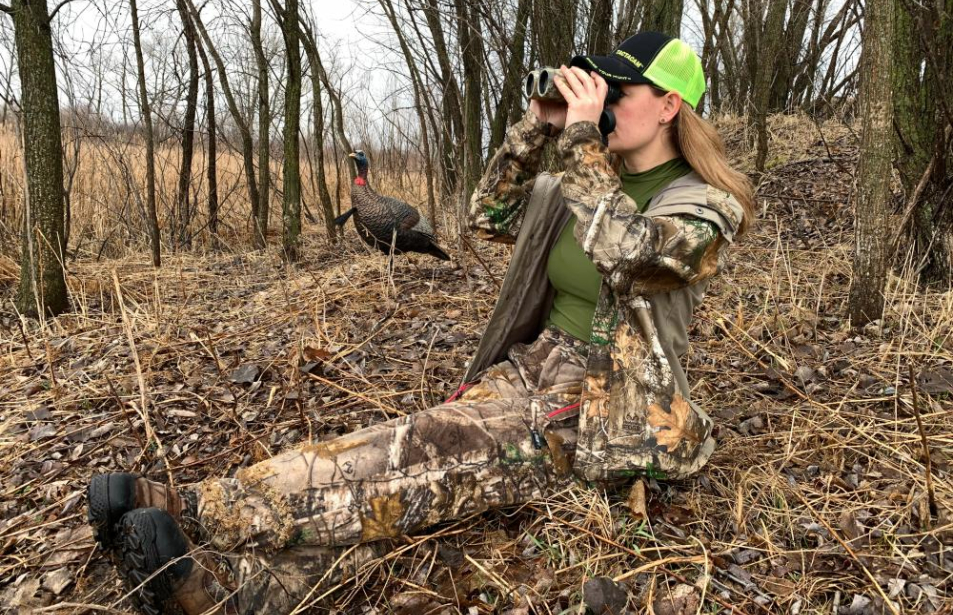
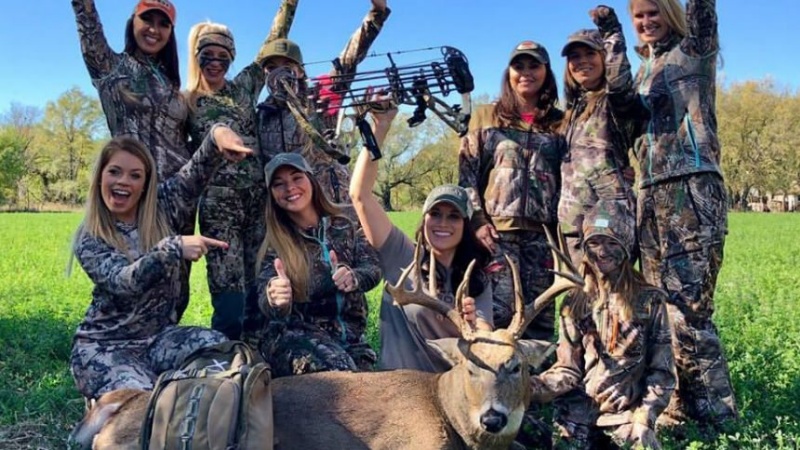
Camouflage and Concealment: Beyond pattern accuracy (e.g., Realtree, Mossy Oak, Kuiu), fabric must be matte and non-reflective. Different patterns are required for ground blinds, timber, and open plains.
Technical Specifications: Performance is quantified. High-end waterproof hunting jackets feature a hydrostatic head rating of 20,000mm or more and breathability ratings exceeding 15,000g/m²/24hrs. Fully taped seams are mandatory. Equally important is fabric "hand feel" – it must be extremely quiet during movement to avoid spooking game.
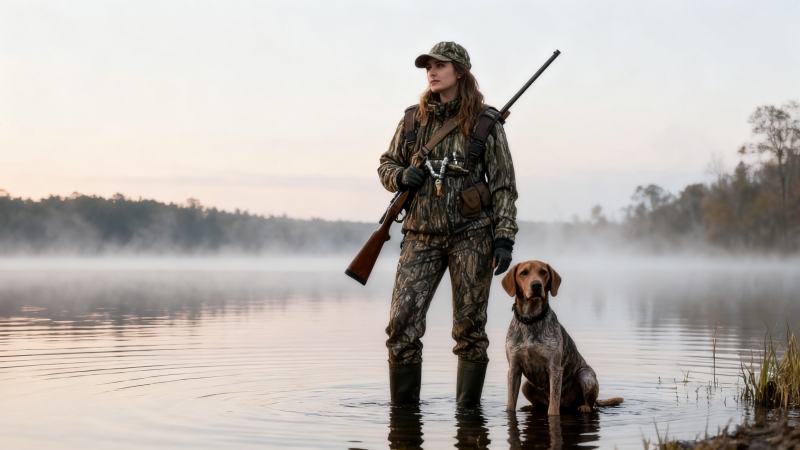
Feature Set: Design is hunter-centric. This includes oversized pockets for gear, quiet zipper garages, articulated knees and elbows for mobility, and attachment points for accessories. Waterfowl hunting clothing will feature fully waterproof construction with neoprene cuffs, while upland bird hunting gear prioritizes breathability and briar-resistant fabrics.

Critical Sourcing Considerations for B2B Buyers
Navigating the hunting apparel supply chain requires attention to specific buyer preferences and common pain points.
Preference for Proven Performance: Hunters are influenced by field testing and word-of-mouth. B2B buyers should partner with suppliers whose products are built to validated technical specs, not just marketing claims. Requesting sample garments for independent evaluation is crucial.
The Durability Imperative: Hunting gear undergoes extreme abrasion from brush, rocks, and repeated use. Key metrics to source for include fabric tear strength (measured in Newtons) and abrasion resistance (Martindale or Wyzenbeek tests). Reinforced stitching (e.g., bar-tacking at stress points) is a must.
Compliance and Certification: Depending on the region, materials may require certifications such as OEKO-TEX Standard 100 (for harmful substances) or REACH compliance. Proof of these certifications from the fabric mill and final assembly factory is a minimum due diligence step.
The MOQ and Customization Challenge: Camouflage patterns are often licensed, leading to high minimum fabric orders. A strategic supplier like Bowins can offer solutions through "stock pattern" programs or efficient mini-order capabilities for custom designs, helping buyers manage inventory risk.
Inside the Manufacturing Process: Where Performance is Built
The making of professional hunting gear involves specialized steps that differentiate it from standard apparel manufacturing:
Pattern Engineering for Function: Patterns are drafted factoring in layered clothing underneath and optimized for a range of motion (e.g., a shooting posture). This requires anatomical expertise.
Silent Construction Techniques: Specialized sewing machine feet, needle types, and thread tensions are used to minimize stitching noise. Seam sealing tape must be applied flawlessly to avoid crackling sounds.
Waterproof Component Integration: The application of zippers, vents, and pockets without compromising the waterproof barrier is a skilled process. High-frequency welding is often used for critical seals.
Rigorous Final Testing: Beyond standard quality checks, batches should undergo water column tests and on-site "sound checks" for fabric and component noise. A reputable manufacturer will have documented QC protocols for these performance criteria.
FAQ: For B2B Buyers Sourcing Hunting Apparel
Q1: What are the essential technical documents we should request from a hunting apparel manufacturer?
Always request: 1) Fabric Test Reports for waterproofness, breathability, and tear strength from internationally recognized labs; 2) Certificates of Compliance (OEKO-TEX, REACH); 3) Component Sourcing List for zippers, insulation, and membranes to verify quality origins; and 4) A Manufacturing Process Overview detailing their seam sealing and quality control stages.
Q2: How important is scent-control technology, and how can we verify its claims?
Scent control is a major value-add in certain hunting segments (especially deer). To verify, request independent laboratory test reports showing the reduction rate of key odor compounds (like ammonia or isovaleric acid) over a specified number of washes. Be wary of vague claims without scientific backing.
Q3: What is a realistic timeline and MOQ for developing a custom camouflage hunting jacket?
Timeline: 6-9 months from design to shipment for a new custom item, factoring in pattern development, fabric sourcing (especially for licensed camouflage), sampling, and production. MOQ: For a custom pattern, MOQs can start at 2,000-3,000 yards of fabric, translating to approximately 1,000-1,500 jackets. Suppliers with in-house design teams, like Bowins, can streamline this process.
Q4: How do regional hunting seasons impact production and shipping planning?
Northern Hemisphere seasons peak in Q4. Final shipments to distributors must typically arrive by August/September. This means production must be scheduled for Q1-Q2, with raw materials ordered even earlier. Proactive suppliers help buyers create a 12-month production calendar to avoid missing critical deadlines.
Partner with Bowins for Performance-Driven Hunting Apparel
Sourcing professional hunting clothing requires a supplier that understands the field as much as the factory. It demands a partner committed to technical integrity, durable construction, and the subtle details that define high-performance hunting gear.
Bowins specializes in the OEM/ODM manufacturing of advanced functional hunting apparel. We combine technical fabric expertise with hunter-informed design to create jackets, pants, layering systems, and accessories that meet the rigorous demands of the global market.
Ready to develop a superior hunting apparel collection?
Contact our specialized hunting gear team today to:
Request our technical sourcing pack, including detailed fabric specifications and compliance documentation.
Discuss your specific product needs and receive a preliminary competitive quotation.
Initiate a custom sampling process to evaluate the quality, performance, and accuracy of our manufacturing for your brand.
Let us help you equip your customers with gear that stands up to the challenge. Submit your inquiry to start a partnership built on performance and reliability.
 Francés
 Español
 Русский
 German
 Português
 Swedish
 Italian
 العربية
 Japanese